3.1.2. Hidden Fragility in High - Performing Models
Hidden Fragility in High - Performing Models
Case Study 012: Apple Face ID and Biometric Blind Spots (Location: Global | Theme: Biometric Security and Dataset Coverage)
📌 Overview Apple's Face ID was introduced in 2017 as a facial recognition authentication system. Following its launch, reports emerged that individuals such as siblings, identical twins, and people with similar facial features could unlock each other’s devices. Some incidents involved people of similar appearance across ethnic groups.
🚧 Challenges Face ID's training data and validation processes did not sufficiently account for lookalike individuals. The system's facial similarity thresholds led to false positive authentications in cases involving familial or demographic resemblance.
🎯 Impact Users publicly reported unauthorized device access. Incidents included twins unlocking each other’s iPhones and non-twin relatives or lookalike individuals bypassing security. These cases were documented in news articles and user forums.
🛠️ Action Apple acknowledged in its documentation that Face ID may not reliably distinguish between identical twins or children under 13. The system includes fallback to passcode entry when Face ID is not used.
📈 Results Face ID remained in use with periodic updates. Apple advised users with biometric similarity concerns to use a passcode instead. The incidents raised public attention regarding demographic limitations in biometric training datasets.
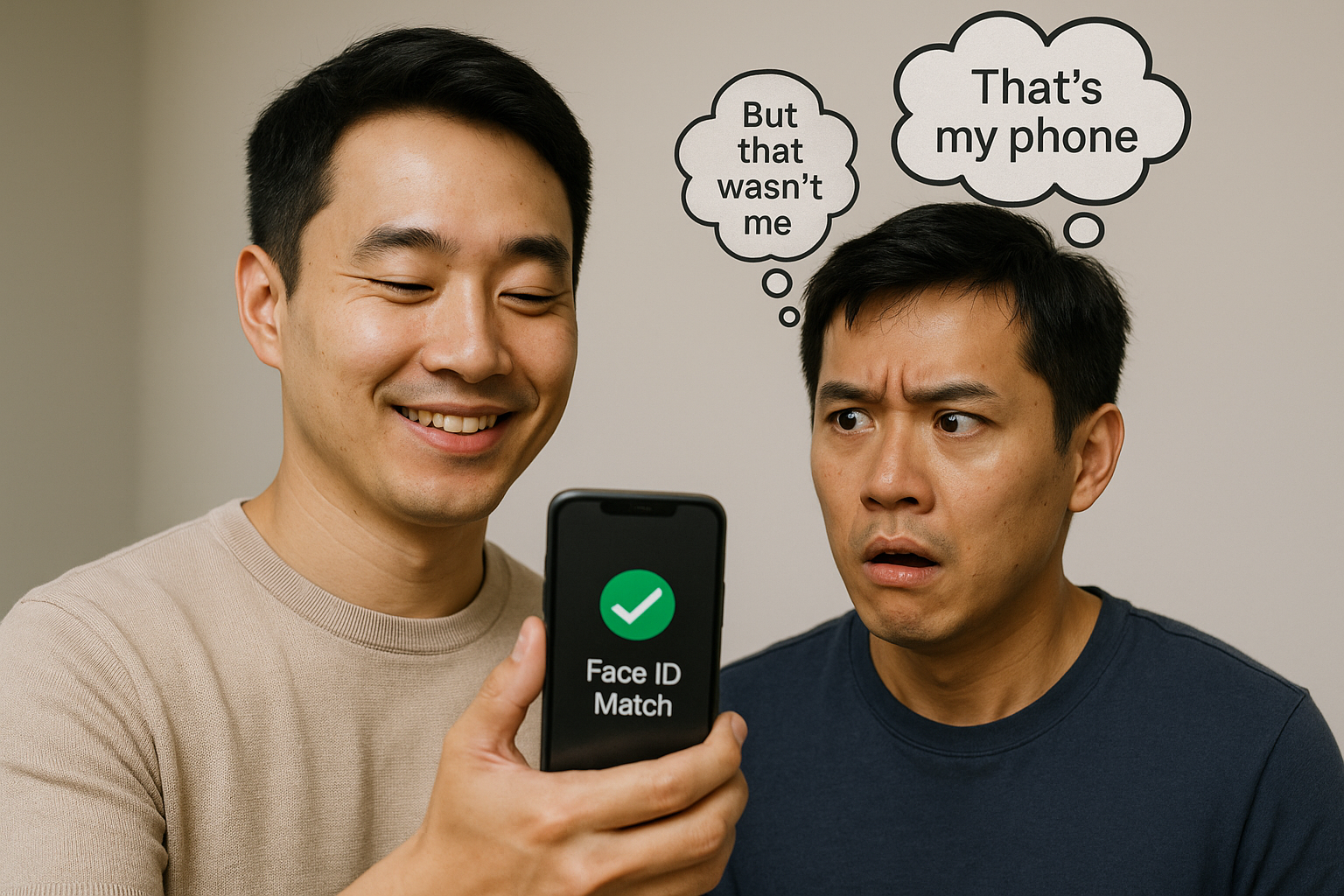
Apple’s Face ID launched with promises of cutting-edge security. In benchmark tests, it achieved extraordinary performance, quick recognition, minimal false positives, broad generalization. But within weeks of launch, something unexpected happened: users began reporting that their siblings, and even strangers, could unlock their devices.
For identical twins, this wasn’t surprising. But it extended beyond twins, into racial homogeneity, familial similarity, and edge demographics not well represented in training datasets. Accuracy had been proven, but robustness had not.
These were not rare anomalies. They were systemic blind spots 1. Apple’s model, optimized for general population averages, had failed to anticipate critical (1) edge cases.
- A rare or extreme input condition not well represented in the training data.
Why Did the Model Fail?
The issue wasn’t that Face ID was poorly engineered, it was that the model’s assumptions went unchallenged:
- Training data didn’t sufficiently include lookalike individuals
- Facial similarity thresholds were not stress-tested across diverse demographics
- Risk evaluation treated “average-case performance” as sufficient for public release
If Apple had applied structured risk assessment from ISO 31000, the following risks would have been flagged:
Table 13: Risk Scoring for Face ID Vulnerabilities
| Risk Description | Likelihood (L) | Impact (I) | Score (L×I) | Risk Category |
|---|---|---|---|---|
| Identical twins unlocking each other’s phones | 4 | 3 | 12 | High |
| Lookalike misidentification across ethnic groups | 3 | 4 | 12 | High |
| Privacy breaches in shared-family devices | 2 | 5 | 10 | High |
These high-risk areas could have prompted mitigations such as:
- Additional fallback authentication steps
- Training set augmentation
- Explicit documentation of biometric limits
How Risk Management Would Have Helped
The failure of Face ID was not inevitable, it was a result of missing structured safety controls during development. Frameworks like ISO 31000 and ISO/IEC 23894 don’t just outline abstract principles; they operationalize safety through repeatable, lifecycle-based risk management steps.
Here’s how these standards could have been applied to prevent the failure:
Table 14: ISO Risk Framework Remedies
| Governance Principle | ISO Reference | Risk Mitigation Outcome |
|---|---|---|
| Contextual Risk Assessment | ISO 31000 – Clause 6.3.1; ISO/IEC 23894 – Clause 6.3.1 | Identify regions/populations (e.g., Asia, MENA) where facial similarity is high; develop population-specific tests |
| Systematic Risk Identification | ISO 31000 – Clause 6.4.2; ISO/IEC 23894 – Clause 6.4.2 | List risks like facial misidentification (twins, racial overlap, shared devices) early in design phase |
| Likelihood × Impact Risk Scoring | ISO 31000 – Clause 6.4.3; ISO/IEC 23894 – Clause 6.4.3 | Quantify bypass risk (e.g., L×I = 12); flag as "High" requiring mitigation before deployment |
| Data Suitability Checks | ISO/IEC 5259-2 (Clause 6.5.3 and 6.5.7) | Validate dataset diversity; ensure proper representation of lookalikes, twins, and regional demographics |
| Fallback Controls | ISO 31000 – Clause 6.5; ISO/IEC 23894 – Clause 6.5 | Add adaptive safeguards, like secondary authentication when similarity threshold is exceeded |
| Lifecycle Monitoring | ISO 31000 – Clause 6.6; ISO/IEC 23894 – Clause 6.6 | Monitor failures post-deployment; retrain models; update risk logs regularly |
These are already built into international safety standards, yet they’re often ignored in commercial AI pipelines.
The Face ID case reveals a broader truth: risk management is not just policy, it’s engineering discipline applied to uncertainty. Without it, even the most advanced models remain vulnerable to predictable, preventable harm.
From Innovation to Responsibility
Galactica’s failure wasn’t just about hallucinated facts, it was about launching a high-impact system without structural accountability. The gap wasn’t in the model, it was in the governance that allowed it to be deployed as if it were ready.
“Trust is not earned by performance alone. It’s earned through safeguards.”
TRAI Challenges: Using ISO 31000 to Flag Hidden Risks
📘 Scenario:
You’re leading a team reviewing an AI facial recognition system before launch. The model shows 98% accuracy on test data.
However, some engineers warn about high error rates on siblings and underrepresented ethnic groups.
🧩 Your Task:
1. Use the Risk Matrix (Likelihood × Impact) from Section 3.1.2 to score at least two new risk scenarios
2. Classify each as Low / Medium / High / Very High Risk
3. Suggest one mitigation for each using ISO 31000 or ISO/IEC 23894
The Face ID failure shows how risk is embedded in design, not just execution. But identifying risk is only the beginning. Next, we explore how structured risk governance can be applied across the entire AI lifecycle. Hereby, shifting from reactive failures to proactive frameworks.
We ask: What makes an AI system technically robust, not just under ideal conditions, but under uncertainty, context shift, and human interaction?
Bibliography
-
Buolamwini, J., & Gebru, T. (2018). Gender shades: Intersectional accuracy disparities in commercial gender classification. Proceedings of the 1st Conference on Fairness, Accountability and Transparency, 77–91. https://proceedings.mlr.press/v81/buolamwini18a.html ↩